Choosing the 2026 best Plant Exosome suppliers requires more than comparing prices or browsing polished websites. It demands evidence, careful terminology, and practical experience with ingredient sourcing. In this guide, we examine suppliers through measurable standards, including raw-material identity, extraction methods, particle characterization, batch consistency, and documentation quality. A bright brochure is not enough.
The term “Plant Exosome” is widely used in cosmetics and biotechnology, but it can describe different materials. Some products may contain plant-derived extracellular vesicles or exosome-like particles rather than fully confirmed exosomes. That distinction matters. Reliable suppliers should explain their terminology, provide certificates of analysis, and identify the source plant, processing conditions, storage requirements, and expected shelf life. Clear answers are valuable. Vague claims are not.
We also consider supplier experience, manufacturing transparency, testing capacity, and responsiveness to technical questions. Useful evidence may include particle-size data, concentration measurements, contamination testing, stability results, and traceability records from cultivation to final packaging. Independent verification strengthens confidence, although it does not remove every uncertainty. Some suppliers publish impressive numbers without enough testing detail. That deserves a closer look.
This comparison is designed for formulators, researchers, distributors, and brands planning 2026 procurement decisions. It does not treat marketing language as scientific proof. Instead, it highlights practical strengths, possible limitations, and questions buyers should ask before selecting a partner. The market is developing quickly. Not every answer is settled. That is worth remembering.
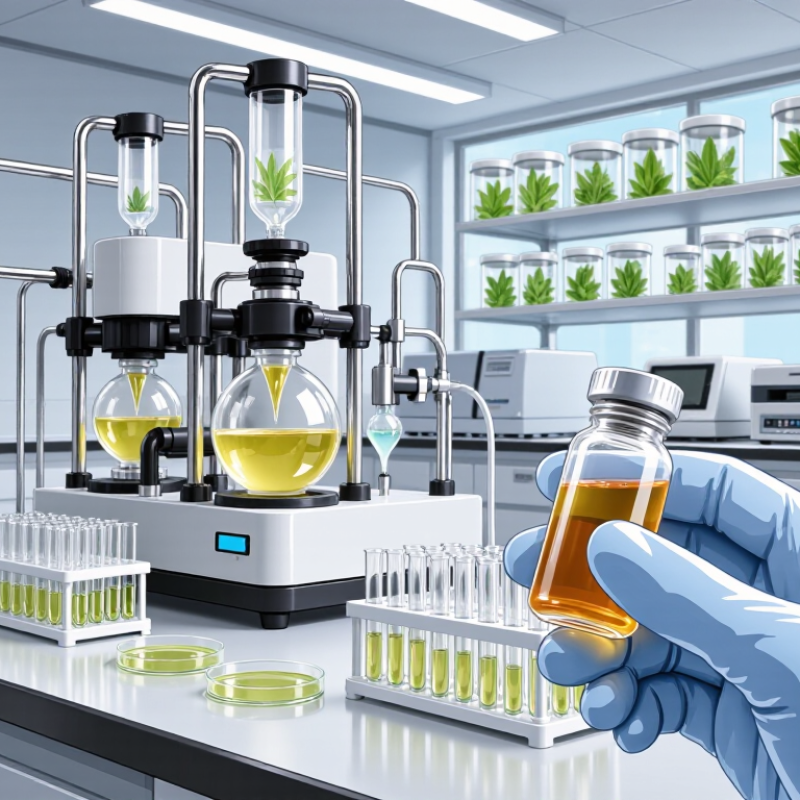
Plant exosomes are commonly described as tiny extracellular vesicles released by plant cells. Strictly speaking, many products called “plant exosomes” are exosome-like nanoparticles. Their size often ranges from about 30 to 200 nanometers. They may contain lipids, proteins, small RNAs, and other plant-derived molecules.
Interest is growing quickly. Grand View Research’s 2024 analysis estimated the broader exosome market could expand at roughly 17% annually through 2030. A 2024 MarketsandMarkets report also identified regenerative medicine, skincare research, and drug-delivery science as major application areas. These figures describe the wider field, not proven benefits from every plant source.
Why use them? Their lipid membranes can help protect fragile compounds during transport. In cosmetic research, this may support ingredient delivery to the skin surface. In laboratory studies, researchers also examine their antioxidant, barrier-supporting, and inflammation-related effects. Results vary by plant, extraction process, storage temperature, and particle purity.
That variation matters. A clear vial does not prove high quality. Reliable suppliers should provide particle-size testing, concentration data, contamination screening, and batch-specific certificates. Methods such as nanoparticle tracking analysis and electron microscopy add useful evidence, but neither method answers every question. I would also question dramatic claims based only on cell studies. Human evidence remains limited, and “natural” does not automatically mean safe, stable, or effective.
In 2026, evaluating plant exosome suppliers requires more than comparing prices. Supplier claims should match independent evidence, not polished brochures. Grand View Research’s 2024 exosome market report projects strong double-digit growth through 2030, but market expansion does not prove product quality. Growth can also increase inconsistency.
A practical audit should examine source identity, cultivation records, harvest conditions, and purification steps. Ask for batch-specific particle counts, protein profiles, size distribution, and contaminant testing. The MISEV2023 guidelines recommend combining several characterization methods because one measurement cannot confirm extracellular vesicle identity. Look for electron microscopy images, nanoparticle tracking data, and orthogonal protein markers. Clear methods matter.
Check potency with a defined biological assay. “High concentration” is not potency. Request raw data, acceptance limits, stability results, and storage records. ISO 20387 guidance supports documented traceability, competency, and controlled biobanking processes. Suppliers should also explain whether results come from one batch or repeated production.
A supplier may report impressive particle numbers while omitting aggregation, residual solvents, endotoxin, or microbial testing. That gap deserves scrutiny. No scorecard is perfect. Some suppliers may provide excellent analytical data but limited long-term stability evidence. Review certificates carefully, verify laboratory independence, and test incoming material before development use. In 2026, the strongest suppliers will be transparent about limitations, not only strengths.
The leading plant exosome suppliers in 2026 are not defined by marketing claims alone. They show clear sourcing records, controlled processing, and repeatable batch results. Reliable suppliers identify the plant source, extraction method, particle size, concentration, and storage conditions. They also provide certificates of analysis, sterility data, endotoxin results, and contaminant screening. These details help researchers compare materials without relying on attractive labels.
Scientific terminology deserves attention. Some suppliers call their products “plant exosomes,” although the particles may be better described as plant-derived extracellular vesicles. A professional supplier should explain this distinction clearly. Independent testing is valuable, especially for morphology, protein content, nucleic acids, and long-term stability. In practical procurement, documentation often matters more than impressive packaging. No supplier is perfect. Data may vary between batches, and some specifications remain incomplete.
Tips: Request a recent test report before ordering. Check whether the report matches the exact batch. Ask how samples were stored and transported. Review the supplier’s technical support and response time. Compare at least three sources using the same evaluation criteria. A small pilot test can reveal unexpected differences in appearance, concentration, or performance. That step may feel slow, but it prevents expensive assumptions.
What Quality Standards Should Suppliers Meet?
Reliable plant exosome suppliers should begin with clear botanical identity. Each batch needs the plant species, growing region, harvest date, and plant part recorded. DNA barcoding or validated botanical testing can reduce substitution risks. However, one test rarely proves complete authenticity.
Manufacturing controls matter just as much. Suppliers should describe extraction conditions, filtration steps, and storage temperatures. Look for documented limits for microbial contamination, heavy metals, pesticides, residual solvents, and endotoxins. Particle size and concentration should be measured with validated methods, not estimated from appearance. The product should arrive in sealed, traceable containers with a batch number and expiration date.
Ask for a complete certificate of analysis. It should match the exact batch, testing laboratory, methods, and acceptance limits. Independent testing adds credibility, especially when results involve sterility, identity, or stability. Suppliers should also provide transport records and explain how temperature changes affect the material.
Transparency is essential. A serious supplier will not promise identical performance from every plant source. Natural variation exists. I would also question dramatic claims based only on particle counts. More particles do not automatically mean better quality. Stability data may be incomplete, and that weakness should be stated openly. Quality systems, trained personnel, corrective-action records, and routine audits provide stronger evidence than polished marketing language.
A strong supplier dossier should provide documented evidence across identity, purity, safety, potency, manufacturing control, and traceability. The scores below represent a practical 10-point evidence checklist, not company performance data.
Suppliers should align applicable operations with recognized quality systems such as ISO 9001, GMP principles, ISO 14644 cleanroom controls, validated analytical methods, batch traceability, sterility and endotoxin testing, stability studies, and potency assays. Acceptance limits should be product-specific and supported by validation data.
The best supplier depends on your application, not only on price or particle count. Start by defining your needs, such as research, cosmetic formulation, or laboratory testing. Ask whether the material is truly plant-derived and how it was isolated. “Plant exosome” can describe different extracellular vesicle preparations, so clear terminology matters. Request a current certificate of analysis for every production lot. It should include particle concentration, size distribution, protein content, sterility, endotoxin levels, and contaminant screening. Reliable suppliers also explain storage temperatures, freeze-thaw limits, and expected shelf life.
Tips: Compare at least three suppliers using the same questions. Check batch records, traceability, and production dates. Ask for raw-material information, including plant species and growing conditions. A strong technical team should discuss formulation compatibility without promising unrealistic results. For sensitive applications, request a small evaluation sample before signing a large contract. Test it under your actual mixing, light, and temperature conditions. Small details matter.
Experience has taught many researchers that attractive specifications may not predict performance. Particle numbers can vary between testing methods. A polished document is not enough. Look for independent testing, transparent methods, and clear responses to difficult questions. Supplier quality systems should support repeatable manufacturing and controlled changes. No supplier is perfect, and some documentation may still need clarification. That is where careful review helps. Choose the partner that provides evidence, communicates limitations, and supports your application after delivery.
Plant exosomes are tiny particles released by plant cells. Many products are more accurately called plant-derived extracellular vesicles. Their sizes often range from 30 to 200 nanometers. They may contain lipids, proteins, and small RNA molecules.
Their lipid membranes may help protect fragile compounds during transport. Researchers study their possible effects on skin delivery, antioxidant activity, and barrier support. Some studies also examine inflammation-related responses. Evidence differs between plant sources and laboratory methods.
Human evidence remains limited. Many findings come from cell or laboratory studies. Results may not predict real-world performance. I would question dramatic claims based only on early experiments.
Plant species, extraction methods, storage temperature, and particle purity can affect results. Batch differences may also change concentration and performance. A clear vial proves little. Appearance is not a quality test.
Compare the plant source, extraction process, particle size, concentration, and storage conditions. Request a recent certificate for the exact batch. Review contamination screening and technical support. A small pilot test can reveal unexpected differences.
Useful testing may include particle-size analysis, concentration measurement, microscopy, sterility checks, and endotoxin screening. Reports should identify the testing methods and acceptance limits. Independent testing adds confidence. No single method answers everything.
It should show the batch number, plant identity, test laboratory, methods, results, and expiration date. It should also include storage and transport conditions. Check that the report matches the delivered container. Details matter.
Not necessarily. More particles do not automatically mean stronger or safer material. Purity, stability, identity, and contamination results also matter. This is easy to overlook. Some specifications may remain incomplete.
Plant Exosome materials are increasingly used in skincare, research, and biotechnology because they may carry naturally occurring proteins, lipids, and signaling molecules. Their potential applications depend on the source plant, extraction process, formulation, and intended use. In 2026, evaluating suppliers requires more than comparing prices: buyers should review raw-material traceability, manufacturing consistency, documentation, testing methods, and technical support. A reliable supplier should clearly explain its production process and provide suitable quality records for every batch.
The leading suppliers are those that combine strong research capabilities with transparent manufacturing and dependable customer service. Important quality standards include identity confirmation, purity testing, microbial and contaminant screening, stability data, storage guidance, and clear labeling. To choose the best supplier, organizations should define their application requirements first, then compare sample performance, documentation, scalability, delivery reliability, and regulatory compatibility. A careful, evidence-based selection process can reduce quality risks and support consistent results in both development and commercial projects.

Bieyouth