Choosing a Bovine Colostrum supplier is a quality decision, not just a price comparison. The National Academies’ 2021 Nutrient Requirements of Dairy Cattle and peer-reviewed colostrum-management research offer useful technical context. Godden and colleagues describe 50 g/L of immunoglobulin G (IgG) as a common benchmark for high-quality first-milking colostrum. That benchmark concerns calf colostrum; it does not, by itself, verify a finished ingredient or product.
Ask suppliers for batch-specific certificates of analysis. Check how IgG is measured, what microbial tests are performed, and whether results can be traced to the production lot. Request clear records for collection, processing, storage, and transport. A chilled sample and a polished brochure are not enough. Details matter.
Dairy scientist Sandra Godden’s practical framework is often summarized as “quality, quantity, quickness, cleanliness, and quantification.” It is a helpful reminder that sourcing depends on more than one number. For buyers, the same care means checking identity, consistency, and handling evidence—not accepting broad claims at face value. Compare documentation across several lots, and ask what happens when a result falls outside specification. Some supplier materials may look reassuring but leave important questions unanswered. That deserves a second look. A transparent supplier should explain its methods, limitations, and corrective steps in plain language. This guide explores those checks so buyers can assess Bovine Colostrum suppliers with better questions and more reliable evidence.
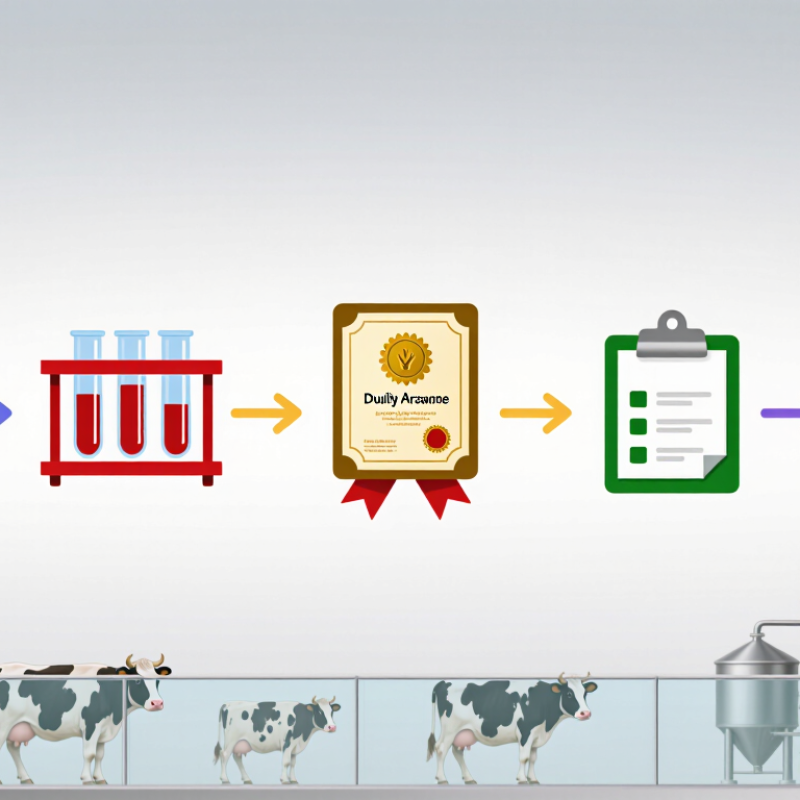
Before choosing a bovine colostrum supplier, define the product you actually need. Decide whether the powder is intended for capsules, drink mixes, or clinical nutrition. Each format requires different solubility, taste, moisture, and packaging controls. Set a clear immunoglobulin G target, such as a minimum percentage per serving. Specify the serving size, daily use, and acceptable color variation.
Source requirements matter too. Ask whether the colostrum comes from healthy, traceable herds. Confirm collection timing after calving, because early milk usually contains higher immunoglobulin levels. Request certificates of analysis for every batch. These should cover IgG, microbiological limits, moisture, heavy metals, and relevant allergens. Storage conditions should be practical, not merely impressive on paper. A supplier should explain processing temperatures and how heat exposure is controlled.
Tips: Write your requirements before requesting quotations. Compare test methods, not only numbers. Ask for samples from different batches. Check whether the powder dissolves evenly in cool water. It may leave sediment. That small detail can affect customer acceptance. Also review minimum order quantities, lead times, and packaging sizes. A specification can still miss real-world problems. Recheck it after pilot testing, especially if the product will face humidity, transport delays, or repeated opening. Reliable suppliers should answer clearly, provide consistent records, and acknowledge limitations instead of promising perfection.
| Requirement Area | What to Define Before Sourcing | Practical Target or Acceptance Criteria | Documents or Tests to Request | Priority |
|---|---|---|---|---|
| Product format | Decide whether the product will be supplied as powder, liquid, capsule, tablet, sachet, or an ingredient for further processing. | Format must match the intended use, filling equipment, storage conditions, and serving size. | Product specification, technical data sheet, sample packaging, and reconstitution instructions where applicable. | Essential |
| Harvest timing | Specify whether the raw material is collected from first-milking colostrum or later milkings after calving. | First-milking material is generally preferred when a higher concentration of naturally occurring immunoglobulins is required. The collection window should be clearly documented. | Collection records, milking-time records, supplier standard operating procedure, and batch traceability documents. | Essential |
| Immunoglobulin content | Define the minimum immunoglobulin level required for the finished ingredient, especially IgG. | Set a numeric minimum on the specification, such as an IgG assay requirement appropriate to the intended application. Do not rely only on terms such as “premium” or “high quality.” | Batch-specific certificate of analysis, validated IgG test method, method detection limits, and testing frequency. | Essential |
| Protein and moisture | Define nutritional composition and powder stability requirements. | Specify minimum protein and maximum moisture values based on the formulation. Lower moisture generally supports better powder stability, but the limit must be suitable for the process and packaging. | Certificate of analysis showing protein, moisture, ash, fat, and carbohydrate results, including test methods. | Important |
| Processing method | Identify the drying and heat-treatment process and its effect on protein functionality. | Request a controlled process designed to limit unnecessary heat exposure. The supplier should explain whether pasteurization, low-temperature drying, freeze-drying, or another process is used. | Process flow chart, critical process parameters, validation summary, and heat-treatment records. | Essential |
| Microbiological safety | Establish limits for pathogens, indicator organisms, yeast, and mold. | Finished product should comply with the microbiological limits required in the destination market and intended category. Pathogen requirements should be explicit rather than implied. | Batch microbiological report covering relevant organisms such as Salmonella, Cronobacter where applicable, Escherichia coli, Staphylococcus aureus, yeast, and mold. | Essential |
| Contaminant control | Define acceptable levels for heavy metals, pesticides, veterinary drug residues, mycotoxins, and other region-specific contaminants. | Limits should follow the regulations of the country where the product will be sold. Results should be reported against measurable limits, not only as “passed.” | Recent contaminant testing, laboratory accreditation details, sampling plan, and regulatory compliance statement. | Essential |
| Animal health and welfare | Define herd health, veterinary oversight, and sourcing restrictions. | Milk should come from healthy animals managed under documented veterinary and animal-welfare procedures. Clarify disease-control policies and use of prohibited substances. | Herd health program, veterinary declarations, animal-welfare policy, and farm approval records. | Essential |
| Geographic and farm traceability | Determine how far the supplier can trace each lot back through collection, processing, and packaging. | Each batch should have a unique lot number and be traceable to the relevant collection and production records. | Traceability procedure, mock recall results, lot coding example, and chain-of-custody records. | Essential |
| Allergen and composition profile | Identify milk allergens and any added ingredients, carriers, flow agents, or processing aids. | Ingredient statement and allergen declaration must be complete and consistent with the destination-market requirements. The product should be free from undeclared additives. | Full composition specification, allergen statement, non-GMO statement if required, and processing-aid declaration. | Essential |
| Solubility and sensory properties | Define the required dispersibility, color, odor, taste, and particle characteristics. | Powder should meet agreed limits for appearance, odor, flavor, bulk density, and dispersibility in the intended liquid and temperature range. | Finished-product specification, sensory evaluation report, solubility test procedure, and representative sample. | Important |
| Shelf life and packaging | Set the required shelf life and define protection from moisture, oxygen, light, and temperature changes. | Supplier should provide stability data supporting the stated shelf life, with packaging suitable for the product’s moisture sensitivity. | Stability study summary, packaging specification, storage conditions, residual oxygen or moisture data where relevant, and expiry-date policy. | Essential |
| Storage and transportation | Specify acceptable temperature, humidity, handling, and transport conditions. | Storage instructions should be clear and practical, such as keeping the product sealed in a cool, dry place and protecting it from excessive heat and humidity. | Storage specification, transport requirements, shipping validation or monitoring records, and deviation-handling procedure. | Important |
| Quality management system | Assess the supplier’s manufacturing controls, sanitation program, training, and change-control process. | Supplier should operate a documented food-safety and quality system appropriate to the product and market, with internal verification and corrective-action procedures. | Quality certifications, audit report or questionnaire, HACCP plan, sanitation records, CAPA procedure, and change-notification policy. | Essential |
| Regulatory and market fit | Define the sales country, product category, permitted claims, labeling rules, and import requirements. | All specifications, labels, claims, and supporting evidence should be reviewed against the regulations of the target market before purchase. | Regulatory compliance statement, label review documents, export certificates where applicable, and claim substantiation records. | Essential |
| Supply capacity and consistency | Set the annual volume, minimum order quantity, forecast process, lead time, and acceptable batch-to-batch variation. | Supplier should demonstrate adequate capacity and provide consistent results for key parameters such as IgG, moisture, microbiology, and sensory quality. | Capacity statement, production lead-time schedule, historical batch data, sample approval process, and supply continuity plan. | Important |
| Commercial sample approval | Define how samples will be evaluated before signing a supply agreement. | Approve samples using the same critical tests and application trials planned for commercial batches. Document acceptance criteria in writing. | Sample request form, signed specification, trial protocol, retained sample policy, and first-article approval record. | Preferred |
Decide whether the powder suits capsules, drink mixes, or clinical nutrition. Each format needs different solubility, taste, moisture, and packaging controls. Set a minimum IgG percentage per serving. Keep the specification practical.
Ask whether the colostrum comes from healthy, traceable herds. Confirm collection timing after calving. Earlier collection usually contains more immunoglobulins. Request collection and storage records.
Request lot-specific results for IgG, microbiological limits, moisture, heavy metals, and relevant allergens. Compare testing methods, not only reported numbers. A percentage without its method can mislead. Ask for every batch.
Test samples from different production batches. Dissolve the powder in cool water and observe the result. Look for sediment, clumps, or uneven mixing. Small details affect customer acceptance.
Ask about moisture protection, packaging sizes, and recommended storage conditions. Check how the powder handles humidity and repeated opening. Transport delays can expose weak packaging. Paper claims are not enough.
Ask for a sample traceability file. It should connect the finished lot with collection, processing, and storage records. Check whether the supplier can identify affected customers during a quality issue. A neat spreadsheet can still be wrong.
Compare minimum order quantities, lead times, payment schedules, and shipping responsibilities. Clarify procedures for disputed or rejected goods. Ask how prices change when raw material costs shift. Put agreements in writing.
Vague answers about handling should raise questions. Repeated documentation gaps matter more than one missing detail. A low quote may hide delays or weak remedies. I would not expect perfection. But I would expect clear records.
Choosing a Bovine Colostrum supplier starts with clearly defining your product requirements, including the intended format, specifications, and volume. Then examine where the colostrum comes from and how farms manage animal care, health, and collection. A responsible sourcing approach helps establish confidence in the product before it reaches processing.
Review how colostrum is collected, handled, and processed, and ask what quality and safety tests are performed. Check that the supplier can provide suitable documentation and meet relevant regulatory requirements. Finally, assess reliability through consistent supply, clear traceability from farm to finished product, responsive communication, and transparent commercial terms. Considering these factors together can help you select a supplier whose practices and capabilities align with your quality expectations and business needs.

 Bieyouth