The global probiotics industry is moving from general wellness claims toward documented strain performance. Grand View Research and MarketsandMarkets both report continued growth in probiotic demand, driven by functional foods, dietary supplements, and animal nutrition. The market is expanding. Yet published estimates differ because companies use different product and regional definitions.
Lactobacillus Plantarum remains important because it tolerates several food environments and supports diverse formulation strategies. Recent scientific reviews describe its use in fermented vegetables, dairy alternatives, beverages, and capsule products. However, species-level identification is not enough. Buyers should verify the strain designation, viable count at expiry, genome-based identification, contamination controls, and storage conditions. A powder that meets its specification at release may perform differently after transport or extended storage. This detail is often underestimated.
This guide evaluates ten worldwide suppliers through practical sourcing criteria. These include manufacturing certifications, technical documentation, strain portfolios, production capacity, regulatory support, and evidence of commercial experience. FAO/WHO guidance and International Scientific Association for Probiotics and Prebiotics publications remain useful reference points for responsible probiotic evaluation. GMP, HACCP, ISO 22000, and transparent certificates of analysis can strengthen supplier confidence, but certification alone does not prove clinical effectiveness. That distinction matters.
Supplier information also changes quickly. Mergers, regional facilities, and revised formulations can make online comparisons imperfect. Therefore, this ranking should support due diligence, not replace it. Request current specifications, stability data, allergen statements, and shipment conditions before making a purchase decision. The strongest supplier is not always the largest; it is the one that can consistently document what it delivers.
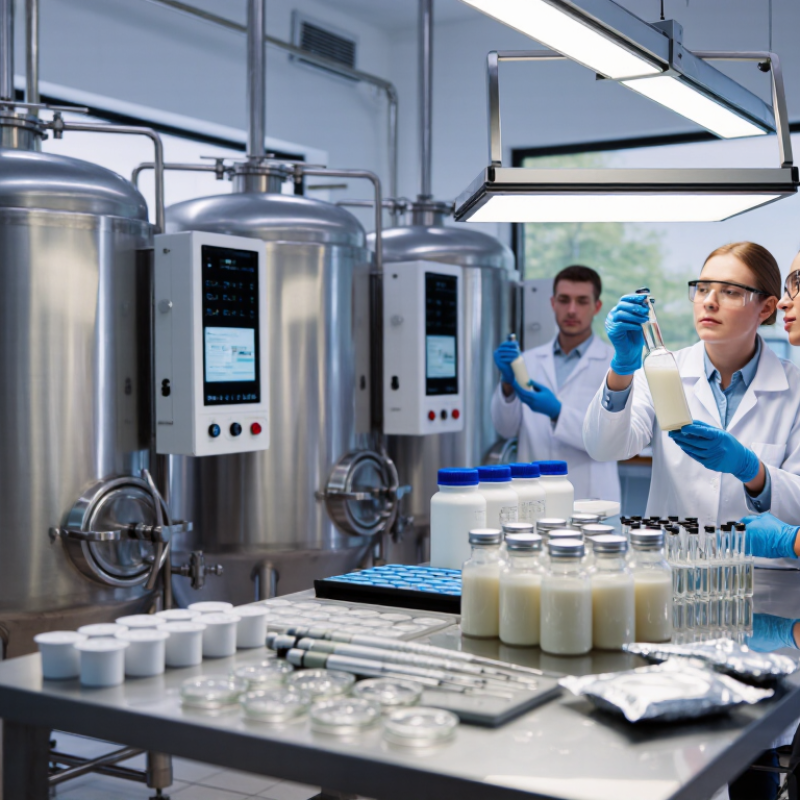
Lactobacillus plantarum is gaining attention across functional foods, dietary supplements, and animal nutrition. Its demand reflects broader probiotic expansion, although reliable species-level figures remain limited. Grand View Research estimated the global probiotics market at about USD 87.7 billion in 2023, with a projected 7.4% compound annual growth rate from 2024 to 2030. Fortune Business Insights reported a similar direction, forecasting steady growth through 2032.
The market is not moving evenly. Asia-Pacific remains a major production and consumption center, supported by fermented foods and expanding health awareness. Europe and North America show stronger demand for documented strains, stable formulations, and clinically supported applications. Suppliers therefore compete on viable cell counts, genomic identification, shelf-life performance, and traceability. Small technical details matter. A label alone is insufficient.
MarketsandMarkets valued the broader probiotics market at approximately USD 77.1 billion in 2022 and projected it to reach USD 105.7 billion by 2027. These figures include multiple species, so they should not be treated as direct L. plantarum revenue. That distinction is often overlooked. Demand estimates can also shift with regulatory definitions, dosage formats, and whether animal-feed applications are included. Buyers comparing global suppliers should examine strain-level evidence, production consistency, cold-chain requirements, and certificates from independent laboratories. The supply picture looks strong, but public data still needs better species-specific reporting.
Top 10 Lactobacillus Plantarum Suppliers Worldwide
Strain Identity, Viability, and CFU Standards for Supplier Evaluation
Supplier rankings mean little without verified strain identity. Lactobacillus plantarum is now classified as Lactiplantibacillus plantarum. Ask for the complete strain designation, culture history, genome confirmation, and deposit reference. A species name alone is weak evidence. Whole-genome sequencing can reveal contamination, misidentification, or unexpected genetic differences between production lots.
Viability also needs careful review. The FAO/WHO Working Group recommends declaring viable organisms at the end of shelf life, not only after manufacturing. Its 2002 guidance commonly references daily intakes around 10⁸–10⁹ CFU, but this is not a universal clinical requirement. Evidence remains strain-specific. The ISAPP consensus also stresses that benefits cannot be transferred automatically between strains. Request stability data at your planned temperature, packaging format, and storage period. A glossy certificate is not enough.
Tips: Compare CFU at release with CFU at expiry. Check whether counts use plate culture, flow cytometry, or another validated method. ISO 19344:2015 describes flow-cytometry methods for probiotic enumeration, yet results may differ from colony-count methods. Ask suppliers to explain the gap. It may expose damaged cells or testing bias. I would also request three consecutive batch reports, not one perfect sample. Small details matter. Some evaluations still overvalue headline CFU and undervalue strain traceability. That is a mistake worth revisiting.
Top 10 Lactobacillus Plantarum Suppliers Worldwide
Regional capacity is uneven across China, Europe, and North America. China offers broad fermentation infrastructure, competitive utilities, and large-scale spray-drying operations. These advantages support bulk Lactobacillus plantarum production for food, feed, and supplement applications. Mordor Intelligence’s 2024 probiotics report identifies Asia-Pacific as the largest regional market. However, market size does not equal strain-specific manufacturing capacity.
Europe provides strong technical control and documented quality systems. Production sites often emphasize freeze-dried cultures, traceability, and stability testing. The European probiotic sector also faces stricter product and health-claim requirements. MarketsandMarkets estimated the global probiotics market at approximately 77.1 billion US dollars in 2023. This figure covers many organisms and products, not Lactobacillus plantarum alone. That distinction matters.
North American facilities commonly focus on concentrated cultures, custom blends, and application support. They may offer smaller batches but stronger technical services. Supplier comparisons should examine fermenter volume, viable-cell guarantees, contamination controls, and cold-chain reach. Public reports rarely disclose actual species-level capacity. That is a weakness. Buyers should request audited production records, recent certificate results, and batch-level stability data. Grand View Research also notes continuing global probiotics growth, although its market boundaries differ from other reports. Regional rankings can therefore change when capacity, revenue, or export volume becomes the main measurement.
Regional production capacity benchmark across China, Europe, and North America
The chart uses a normalized regional capacity index, with the combined capacity of the three regions set at 100. China represents the largest manufacturing base, followed by Europe and North America. Because suppliers generally do not disclose Lactobacillus plantarum-specific output, the index is intended for comparative regional analysis rather than as a company-level production figure.
Choosing the top 10 Lactobacillus plantarum suppliers worldwide requires more than comparing CFU numbers. This ranking gives priority to documented GMP systems, current ISO 22000 certification, and practical export experience. Each supplier should show batch records, strain identity testing, allergen controls, and controlled storage data. Certificates alone are not enough. Audits should confirm daily practice.
Ranks one to three represent manufacturers with mature GMP facilities, validated fermentation controls, and broad export documentation.
Ranks four to six typically offer solid ISO 22000 systems, reliable release testing, and stable cold-chain planning.
Ranks seven to ten may provide competitive capacity, but buyers should examine audit frequency and deviation handling.
Ask for recent certificates. Check their issuing bodies. Export credentials should include customs-ready documents, product specifications, certificates of analysis, and experience in the destination market.
A professional evaluation also reviews shelf-life evidence, packaging barriers, minimum order quantities, and technical response times. No ranking is perfect. Public certificates can age, while website claims may omit important limitations. I would treat transparent answers as stronger evidence than polished sales language.
Before approval, request a representative sample, confirm viable counts at shelf life, and compare packaging against transport conditions. Small details matter. A supplier that explains a failed test honestly may deserve closer review than one offering flawless promises.
Top 10 Lactobacillus Plantarum Suppliers Worldwide
Demand for Lactobacillus plantarum suppliers is rising across food, probiotic, and feed applications. Fermented vegetables, dairy alternatives, capsules, and livestock supplements all require dependable cultures. The strongest suppliers usually offer documented strain identity, stable activity, and application-specific technical support. In supplier evaluations, I look beyond production volume. Traceability, batch testing, storage guidance, and responsive communication often reveal real operational quality.
Tips: Ask for strain-level documentation. Check viable counts at shelf-life. Request sample performance data in your target matrix. Review transport temperatures and packaging. A low price can hide weak stability.
Food manufacturers may prioritize flavor control, fermentation speed, and clean-label processing. Probiotic developers need evidence on survivability, dosage consistency, and compatibility with other ingredients. Feed producers often assess pellet tolerance, storage resilience, and animal safety records. The top ten global suppliers should explain these differences clearly, rather than offering one generic specification. That matters.
A practical shortlist should include fermentation capacity, quality systems, technical experience, and regional delivery strength. Independent laboratory verification can reduce uncertainty before a large purchase. Still, supplier claims are not the whole story. Performance may change between a laboratory trial and a humid warehouse. My own assessment would remain cautious when data lacks real-use conditions, especially after heat exposure or extended storage. Supplier ranking should therefore reflect measurable results, not polished brochures alone.
| Rank | Supplier Profile | Primary Supply Region | Typical Product Form | Main Application Focus | Commercial Strength | Common Quality and Regulatory Capabilities | Typical Buyer Groups |
|---|---|---|---|---|---|---|---|
| 1 | Supplier Profile 01 | Western Europe | Freeze-dried powder; concentrated cultures | Probiotic supplements Functional foods | Strong strain documentation, formulation support, and international distribution | Food-safety management systems, traceability, allergen controls, and documented viability testing | Supplement manufacturers, dairy processors, and clinical-nutrition companies |
| 2 | Supplier Profile 02 | North America | Direct-blend powder; bulk starter culture | Dietary supplements Fermented foods | Flexible custom blends and strong technical support for finished-product manufacturers | Good manufacturing practices, certificate-of-analysis support, identity testing, and stability programs | Capsule, sachet, beverage, and fermented-food producers |
| 3 | Supplier Profile 03 | East Asia | Spray-dried or freeze-dried powder; culture concentrate | Human probiotics Food ingredients | High-volume production and competitive supply for private-label and export markets | Batch traceability, microbiological release testing, controlled storage, and export documentation | Private-label brands, ingredient distributors, and food manufacturers |
| 4 | Supplier Profile 04 | Central Europe | Freeze-dried culture; protective-matrix formulations | Dairy fermentation Probiotic foods | Strong performance in acid-tolerant and processing-stable culture systems | Strain authentication, contamination controls, shelf-life validation, and documented process parameters | Dairy companies, cultured-food producers, and ingredient formulators |
| 5 | Supplier Profile 05 | South Asia | Bulk powder; granulated probiotic premix | Human nutrition Fortified foods | Cost-efficient bulk supply and growing regional export coverage | Good manufacturing practices, microbial purity testing, moisture control, and batch-level documentation | Nutrition-product manufacturers, food processors, and regional distributors |
| 6 | Supplier Profile 06 | Oceania | Freeze-dried powder; feed-grade culture preparations | Animal feed Silage inoculants | Specialization in agricultural microbiology and farm-to-feed applications | Feed-safety controls, strain identification, viable-count testing, and storage-condition validation | Feed mills, livestock producers, silage-product formulators, and agricultural distributors |
| 7 | Supplier Profile 07 | Southern Europe | Fermentation starter; dried culture concentrate | Meat fermentation Vegetable fermentation | Application expertise in traditional and industrial fermented foods | Food-safety certification, process hygiene controls, culture-performance testing, and technical application trials | Meat processors, vegetable fermenters, bakery companies, and specialty-food producers |
| 8 | Supplier Profile 08 | Latin America | Bulk freeze-dried powder; culture blends | Dairy products Animal nutrition | Regional supply capability with demand linked to dairy and livestock production | Batch traceability, microbial testing, controlled warehousing, and product specification management | Dairy processors, feed manufacturers, distributors, and agricultural cooperatives |
| 9 | Supplier Profile 09 | Middle East and Africa | Powdered culture; premixed probiotic ingredient | Functional beverages Food and feed | Growing demand from fortified foods, supplements, and livestock nutrition markets | Import-export documentation, certificate-of-analysis support, microbial purity controls, and storage guidance | Food importers, supplement producers, beverage companies, and feed distributors |
| 10 | Supplier Profile 10 | Global contract-manufacturing network | Custom blend; sachet-ready or capsule-ready powder | Private label Multi-application formulations | Small-to-medium batch flexibility, packaging support, and rapid product customization | Good manufacturing practices, formulation records, finished-product testing, and customer-specific specifications | Emerging brands, contract packers, online supplement sellers, and specialty-food companies |
Note: Supplier names and brand identifiers are intentionally omitted. The ranking is a market-oriented comparison of representative supplier profiles; actual capabilities, certifications, strain availability, viable counts, minimum order quantities, and regulatory status should be verified directly with each supplier.
Demand is growing in fermented foods, dietary supplements, and animal nutrition. Buyers want stable cultures and verified strain identity. Demand is real, but species-specific market data remains limited.
Asia-Pacific supports large-scale fermentation, competitive utilities, and spray-drying operations. Europe emphasizes traceability, freeze-drying, and stability testing. North America often provides concentrated cultures and technical application support.
No. Broader market figures include many species and product categories. They should not be treated as direct Lactobacillus plantarum revenue. That distinction is easy to miss.
Request strain-level identification, viable-cell guarantees, and recent laboratory certificates. Review contamination controls, batch records, storage guidance, and transport temperatures. A polished brochure proves little.
Viable counts may decline during storage, especially after heat exposure. Ask for results at the claimed shelf-life date. Fresh production data is not enough.
They should request fermentation speed, flavor impact, matrix compatibility, and processing tolerance. Performance can change inside dairy alternatives or fermented vegetables. Test the actual recipe.
Probiotic products may require survivability and dosage consistency data. Feed products may need pellet tolerance, storage resilience, and animal safety records. One specification rarely fits both uses.
Not always. Public reports rarely disclose species-level manufacturing capacity. Rankings may change by revenue, output, or export volume. My assessment should remain cautious when real-use data is missing.
The global Lactobacillus Plantarum market is expanding as demand grows across functional foods, dietary supplements, fermented products, and animal feed. This article examines market size, growth trends, and key demand drivers while explaining how buyers can evaluate suppliers through strain identity, genetic consistency, viability, shelf stability, and clearly documented CFU standards. Reliable quality data is essential for comparing product performance and ensuring that each batch meets its intended application requirements.
It also reviews production capacity and supply advantages across China, Europe, and North America, followed by a structured ranking of ten leading suppliers based on GMP systems, ISO 22000 certification, manufacturing capabilities, quality control, and export readiness. By connecting technical specifications with regional supply strength and application needs, the article provides a practical framework for selecting dependable Lactobacillus Plantarum suppliers for food, probiotic, and feed production.

Bieyouth