Film-forming agents represent a critical intersection of polymer chemistry, material science, and bio-engineering. As a leading OEM Film-Forming Manufacturer, Shaanxi Bieyouth Biotech Co., Ltd. recognizes that the demand for these materials has transcended basic encapsulation. Today, film-forming technology is the backbone of "Active Delivery Systems" (ADS) in cosmetics, "Controlled Release" mechanisms in pharmaceuticals, and "Barrier Protection" in food technology.
In the macro-industrial landscape, the shift toward sustainable, bio-based film formers is accelerating. Traditional synthetic polymers like PVP/VA copolymers are increasingly being supplemented or replaced by natural derivatives such as Pullulan, Sodium Alginate, and Oat Beta-Glucan. This whitepaper explores how our factory integrates 20+ years of foreign trade experience with cutting-edge extraction technologies to provide a 50,000-ton annual capacity that meets global ESG (Environmental, Social, and Governance) standards.
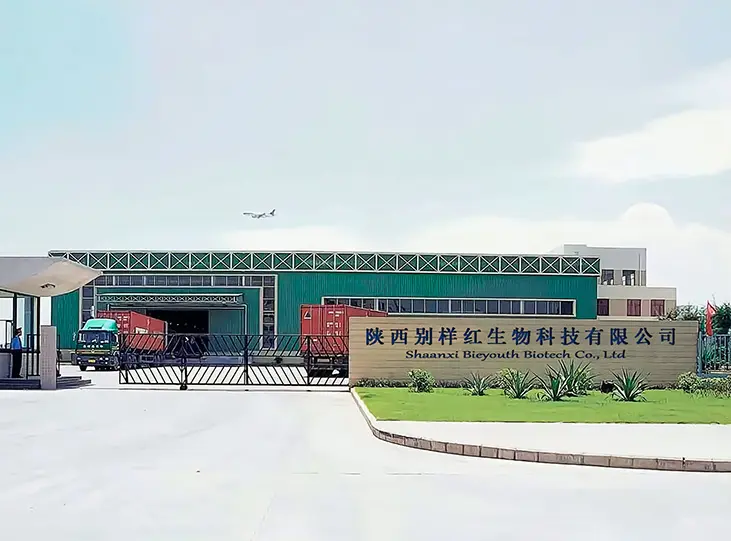
Shaanxi Bieyouth Biotech Co., Ltd. was established in 2018, with too many years of experience in foreign trade import and export. It is a large-scale gold supplier integrating production and sales. We mainly do plant and animal extracts, food additives, cosmetic raw materials and pharmaceutical raw materials.
Our production facilities are GMP certified, with two standardized production workshops and advanced extraction equipment. Our products are exported to the United States, the United Kingdom, Canada, Russia, Australia and other parts of the world.
Management of complete quality control measures and rigorous testing protocols.
We offer private label packaging service for every product, tailored to your brand's identity.
Across the EU and North America, microplastic regulations are reshaping the film-forming market. Our R&D focuses on biodegradable aqueous dispersions that provide the same water resistance as silicones without the environmental persistence.
Modern film formers are no longer static. We are developing "Responsive Films" that release active ingredients like Ceramides or Elastin Peptides in response to skin pH or temperature changes.
By operating as a direct factory, we mitigate the risks associated with global ingredient shortages. Our vertically integrated production ensures that raw materials from plant extracts are processed in-house.
The transition from petroleum-based resins to bio-identical polymers. Utilizing plant-derived polysaccharides to create breathable, non-occlusive barriers for "Clean Beauty" applications.
Integrating lipid-based film formers (like Ceramide AP) with aqueous polymer matrices to enhance skin barrier repair while maintaining aesthetic elegance (non-sticky finish).
Using machine learning to predict the film-forming kinetics of multi-component mixtures, allowing for rapid OEM prototyping and "Right-First-Time" manufacturing.
Creating long-wear sunscreens and water-resistant foundations that don't clog pores, utilizing our Tetrandrine skin-soothing botanical film technology.

Using edible film-formers to extend the shelf life of fresh produce and protect sensitive antioxidants like Coenzyme Q10 from oxidation.
Developing patch-based delivery systems where the film former acts as both the reservoir and the adhesive for ingredients like N-Acetyl-L-cysteine.
Participation in Shanghai International Cosmetics, Personal and Home care Raw Materials exhibition (PCHi).
Obtained the FDA certificate certified by the US Food and Drug Administration.
Launched Global Trade business and built the Institute of Biology for cosmetic raw material research.
Awarded "Integrity Enterprise" and "Quality Assured Enterprise" titles.
A: We specialize in both natural plant-based film formers (like Oat Beta-Glucan and Aloe Vera polysaccharides) and advanced synthetic copolymers for industrial applications.
A: Our R&D team utilizes micro-encapsulation and specific pH-balancing techniques to ensure that ingredients like Ceramide or CoQ10 remain bio-available until application.
A: Yes, our facilities are GMP certified, and we hold FDA certification, ensuring our raw materials meet safety standards in the US, EU, and beyond.
A: Standard sample development takes 7-14 days. Upon confirmation, mass production typically occurs within 21-30 days depending on volume.
 Bieyouth